Search This Blog

Showing posts with label urban gardening. Show all posts

Friday, April 20, 2012

Mar Vista Green Garden Showcase - Sat. Apr. 21st

Image from Mar Vista Green Garden Showcase.  All Rights Reserved.
As spring arrives and April gains its foothold on the year, events such as National Landscape Architecture Month and Earth Day prompt a bevy of great Los Angeles garden tours, ranging in scale from the regional down to the local.  Perhaps one of the most exuberant (and a personal favorite) has to be the one coming up tomorrow.  The Mar Vista Green Garden Showcase, running from 10am to 4pm on Saturday April 21st, is great because it is basically an open-source, neighborhood celebration of sustainability and garden-making in all of its forms.  While some signature designed gardens are always present, you also get the opportunity to see amateur enthusiasts proudly share their converted front and backyards with neighbors and strangers alike.  The result of the event is both grounding and inspiring because it reinforces just how accessible sustainability is becoming and how much the notion of sustainable landscapes continues to infiltrate the community outside the confines of professional dialogue. 

The tour is organized for ease into 6 districts across Mar Vista, and you can preview and filter different focus areas for the gardens on the Mar Vista Green Garden Showcase webpage to help craft what you want to see, including urban farms or habitat-focused gardens.  Below is more info from the event webpage - hope you can make it out!
The Mar Vista Community Council invites you to participate in the FREE fourth annual Mar Vista Green Garden Showcase - a citywide Earth Day celebration on Saturday, April 21st, 2012 from 10 am to 4pm. See the gardens on the tour hereWe have 50 NEW gardens this year! Use the  labels on the side bar to preview the gardens by areas of special interest.
Use this MAP to plan your own personal tour
      Print out the map for each of the six tours - 
          Map 1, Map 2, Map 3, Map 4, Map 5, Map 6
Maps will be available at these 9 gardens the day of the tour. Here are some tips to use the bus and your bike to take the tour!
The tour showcases drought-resistant landscapes and edible gardens with sustainability features ranging from composting techniques to water capture practices. Urban farms range from aquaponic farming to 6 gardens with chicken coops. This year the tour places special emphasis on the critical need for ocean friendly gardens and California native gardens that support much needed pollinators such as honey bees and monarch butterflies. See how creating outdoor rooms provides much more useful livable space than a traditional lawn and creates a sense of community.
This giant eco-festival is comprised of 90 private resident gardens broken into 6 compact self-guided walking tours throughout Mar Vista. On the heels of three wildly successful prior tours that topped 2,000 attendees last year, the Mar Vista Green Garden Showcase will include special guest presenters at many gardens to enhance your knowledge of sustainability in daily living. Especially valuable is the chance for guests to meet do it yourself gardeners who share knowledge and experience. This is truly a giant block party throughout Mar Vista and you will have a blast meeting your neighbors as you visit their gardens.
The Mar Vista Green Garden Showcase seeks to empower Los Angelenos to adopt environmentally conscious living solutions. With most people walking or biking their tours, there is a tremendous sense of community as residents throughout Southern California come to Mar Vista to celebrate our shared vision for a greener life.
Guest presenters on the tour include HoneyLove.org, Los Angeles County Master Gardeners,The Seed Library of Los Angeles, Open Neighborhoods on solar and  Grow Native Nursery. 26 Landscape designers will be at gardens to answer questions and share information.
Mar Vista can make a difference!
For more information please email gardens@marvista.org
Media is welcome.


Friday, July 1, 2011

Local Seed Bank

The LA Times had a great profile about a local, grassroots seed bank effort in Venice.  Attached to Venice High's Learning Garden, the new Seed Library of Los Angeles provides a growing clearinghouse for native and agricultural seeds for community members to access, and an opportunity for like-minded individuals to share knowledge.   More from the article below:
One Sunday afternoon at the garden adjacent to Venice High School, a dozen or so people filed into a small, plain building, one by one, to get three or four tiny envelopes, each holding a few seeds.

That low-key but ambitious event marked the opening of the Seed Library of Los Angeles, an institution its founding members hope will provide free seeds to gardeners and become a preserve of local agricultural diversity.


Like-minded people in communities around the country are doing similar work: offering low-cost or free, local, open-pollinated, pesticide-free seeds. Members borrow seeds, grow plants, and allow a plant or two to go to seed at the end of the season. Those seeds are returned to the library, which will grow 10 of each batch to confirm purity before distributing the rest.

"People are drawn to seed libraries because they feel a certain powerlessness over their food supply," said David King, who is garden master at the Learning Garden at Venice High and founder of the seed library. "They're worried and angered by developments such as genetically engineered alfalfa."

They also seem drawn to playing a role in the cycle of life that's at once romantic and DIY-inspired.

Saving seeds is important work that carries "a sense of the sacred genetic information of our forefathers," King told members at one meeting.

"What could be more poetic and life-sustaining than a seed library?" asked Sarah Spitz, a founding member of SLOLA, which members pronounce SLOW-lah.

Linda Preuss has been saving seeds for 20 years, and said she's hooked on "a fantastic whole process you get to be involved in. It's a great metaphor for life."

"We just like to hold it in our hands. We like to see what color it is — one tiny basil seed that's so tiny, you can hardly see it, and it will produce so much," said Preuss, a computer consultant who is the seed library's database chairwoman and who as a volunteer gardens with residents of a shelter for abused women and children.

On that first distribution day, in May, members took Tommy Toe tomatoes, White Dixie lima beans, Metki White cucumbers. Megan Bomba was among the volunteers who weighed seeds in fractions of a gram a tiny scale and wrote down who "borrowed" what.

"I've always been interested in seed saving, and it was a thought I had several years ago: Wouldn't it be great if gardeners in L.A. could have a seed exchange?" Bomba said later. "I believe in people having access to those resources and being in charge of genetic resources."

Members — about 85 people have joined so far — have hashed out best practices over chocolate mint tea (leaves from the Learning Garden) and homemade bread, as well as listened to the more experienced among them explain how to hand-pollinate flowers.

Library members adopted a "safe seed pledge" — a promise to "not knowingly buy, grow, share or trade genetically engineered seeds or plants." Lifetime membership is $10.

A refrigerator, donated by Spitz, keeps the seeds safe from rodents and insects. King expects it will be two years before the library needs more storage space.

The original library stock came from donations and seeds SLOLA purchased. Decisions about what to buy were based in part on members' desires; King said he also hopes to survey some food professionals, too.

"I'm not a chef, but I'm a pretty good cook. I came up with 46 [ideas] without even an additional swallow of coffee," King said during an interview at the garden, which is just shy of an acre and owned by Venice High School. The school uses 60%, and the community uses the rest through the nonprofit Learning Garden.

Early seed library members said they expected a lot of the saved seeds to be from native plants that thrive in the Southern California climate.

"The increased public interest in going native is just astonishing. It's wonderful," said Genevieve Arnold, seed room manager at the Theodore Payne Foundation for Wildflowers and Native Plants in Sun Valley. One inspiration, she said, is the region's water shortage.

There also are plans for some experimenting.

Saturday, March 12, 2011

Free Fruit Trees!

6a00d8341c630a53ef013487fe90f2970c
Image from LA Times. All Rights Reserved.
Speaking of urban agriculture, on Sunday 400 fruit trees will be given away on a first come, first serve basis at Milagro Allegro Community Garden in Highland Park.  The LA Times has the info below:
Thanks to an anonymous donor, the Milagro Allegro Community Garden in L.A.'s Highland Park neighborhood will give away 400 bare-root fruit and nut trees starting at noon on Sunday.

The donor contacted Milagro Allegro's resident master gardener and teacher Milli Macen-Moore after stumbling upon the garden's blog. "He wanted to do something nice for our garden," said Macen-Moore, adding that the donor kindly picked fruit trees that grow well in the area.

Those trees include: almond, apple, apricot, Black Mission fig, Desert Delight nectarine,three types of peach, Monterrey pear and dwarf Santa Rosa plum.

Trees will be passed out first-come, first-serve for as long as they last. Community and school gardens may request up to five trees; households may request two. Gardeners are asked to bring newspaper and plastic bags to transport the trees. If you miss out, don't fret: Macen-Moore said thousands of organic vegetable plugs, courtesy of school garden guru Mud Baron, also will be given away.


"Sharing the abundance is beautiful to me," Macen-Moore said. "I feel honored that the gentleman made this donation. What a great gesture."


115 S. Avenue 56, Los Angeles

Venice Community Garden

Venice Community Garden at Mildred Avenue
The success of community gardens in LA has been enormous, but all that success has not satisfied the immense demand from the public for growing space.  (Anecdotally, I have been on a waitlist for a nearby garden for over a year, and am still 367th on the list for an opening.)  So, it was with minimal, but well needed fanfare, that the Venice Community Garden opened last year, providing nearby residents a place to grow some vegetables.  Perhaps even more, the story of the garden from the LA Times provides an interesting look at the potentially toxic realities facing community gardens in our urban areas.  The garden, located on a rare vacant lot on Mildred Avenue, was discovered by a couple of burgeoning Master Gardeners, who dreamed up the idea of the garden, and convinced the land owner to lease it to them for their use.  However, initial hopes for the site plummeted when initial soil tests discovered an urban soil profile consisting of a long list of contaminents, pollutants, and carcinogens. 

The garden began to take shape when Kip Wood noticed a “For Rent” sign on an empty lot on Mildred Avenue, down the street from his house. The rent was steep but not impossible. “He probably could have made more parking cars here,” Wood says of the owner. “It’s an empty lot. What else are you going to do with it?”

At an organizing meeting he teamed up with Norma Bonilla, then living in Marina del Rey and, like him, about to start the master gardener course at the time.

“The first thing we did was test the soil -- in five different places, going down about five inches” says Bonilla, pictured at top. “We got the results back and there were exorbitant amounts of arsenic, lead, cadmium, everything. The very worst at dangerous levels. Don't-come-in-here levels.”


They decided to take the topsoil out, removing mounds of debris, broken asphalt and glass, bringing the lot level with the street. The Los Angeles Conservation Corps came in and built 54 4-by-12-foot plots and the gardeners were all instructed to dig down a foot within each space and remove the dirt.


“That was the first time I used a wheelbarrow,” says Mary Barbour, a self-described city girl and one of the original Venice gardeners. Together they amassed a 100-ton pile of toxic soil in the center of the garden that needed to be removed. Then all the gardeners tested their soil one foot down -- just to be sure.

“When the first test came back with a high level of arsenic, we were devastated,” Bonilla says. Adds Wood: “We almost gave up at that point. We took about two weeks off. Our energy was out of the garden.”
After speaking with a number of consultants and experts, the team decided to, in essence, "cap" the soil by placing an impermeable plastic barrier between the existing soil and the new raised planting beds.  In addition, the first wave of plantings featured indicator crops that would noticeably respond to the presence of any contaminants.  Following a successful test period, the garden was up and running, and today's provides a great bounty for the residents using it. 
. . .  they returned to the consultants, horticulturalists, chemists and agronomists, who helped devise a solution: The wooden bed walls were lined with 2-millimeter plastic sheeting, going down two feet. The bed was covered with gypsum, to break up the clay soil, then in rock, to aid drainage. A 50-50 mix of compost and organic soil went on top of that in most beds. Walkways were covered in eight inches of mulch.
 
In August they began planting, mainly shallow-rooting vegetables. If arsenic is affecting the plants, it will kill them before they start fruiting, Bonilla says. If gardeners are nervous, they're told to grow cherry tomatoes only.

From the street the bounty of the winter garden is obvious: towering kale, basketball-sized cabbages, epic artichoke plants. Wood, initially concerned that 4-by-12 plots were too small, says he and his family can’t keep up with the kale, peas, chard and root vegetables. Son Conrad has stopped being a picky eater, grazing like the adults as they walk through the garden.
The garden should continue to be an interesting case study into how we can convert urban brownfields into productive garden space in a safe and effective manner.  Because judging from their popularity in LA, and the growing need for more locally produced food, even more conversions will need to be done in the future.

Thursday, January 13, 2011

Replace Your Lawn Workshops all Month!

Killed my Lawn Bumper Sticker
Image, and bumper stickers, from Tree of Life Nursery.  All Rights Reserved.
Is your 2011 resolution to finally get rid of your lawn?  Well, you are in luck!  Tree of Life Nursery in San Juan Capistrano is hosting "Replace Your Lawn" workshops every Saturday during the month of January.   And, it's all FREE!

Sadly, this post is too late for the first workshop, but three great workshops remain.  Definitely worth checking out for expert advice on re-imagining your front yard without lawn, and the opportunity to find quality native plants for your new outdoor space. Upcoming workshop descriptions are presented below.  But, don't worry, if you can't attend the workshops, Tree of Life has handouts for every workshop (see the link below the descriptions), and a great cheat sheet on 30 California Native Plants to help you get started: Thirty Basic California Native Plants.   Go Green - Plant Natives!

Replace Your Lawn!

Start the New Year right by getting rid of that expensive water-guzzling, care-intensive lawn, and make way for a gorgeous native landscape!  Back by popular demand, we are presenting our Replace Your Lawn (RYL) workshop series in a four part installment about the basics of converting your lawn into a beautiful, carefree, sustainable habitat.

These workshops will be held SATURDAYS at 10 AM in the month of January, beginning January 8, 2011.  This RYL series is unique because we will hold two sessions on plant selection covering evergreen native plants and flowering perennials seperately.

All of these workshops are FREE of charge and each session lasts about an hour and a half, (depending on questions!).  Hopefully you will be able to attend each of the sessions at least once.  No reservations are required.

Saturday, January 8, 2011 - 10:00 AM

Replace Your Lawn I: Kill the Grass

Step one - get rid of it!  This may be more involved than you would expect and the methods to get rid of a lawn are quite varied.  Avoid unnecessary labor and learn several successful methods for lawn removal, depending on you turf type, budget, and timeline. First in our popular four-part series.
Download the handout:icon Replace Your Lawn: Kill the grass!

Saturday, January 15, 2011 - 10:00 AM
Replace Your Lawn II:  Creating and Caring for Your Native Garden
Second in a four-part series about Replacing your Lawn. Now that you have killed your grass, what are supposed to do?  Mike Evans will share from our booklet, "Creating and Caring for your Native Garden", that you can download here.  Learn how to create a thriving native garden.

Saturday, January 22, 2011 - 10:00 AM
Replace Your Lawn III: Plant Selection - Foundation Plants
Learn about the backbone of every native garden: neat, evergreen and carefree foundation plants.  While California’s flora offers a wide variety of flowering perennials to choose from, be sure to use plenty of hearty evergreen woody shrubs to provide an attractive backdrop to showcase your flowers as well as to keep your native landscape looking full, lush and neat.


Saturday, January 29, 2011 - 9:00 AM
Replace Your Lawn IV: Plant Selection - Flowering Perennials

After you have determined the look and feel you wish to achieve in your garden, the fun begins – plant selection!  We will present a group of plants we call our Thirty Plants.  These are the “must-haves” for any native California garden.  This selection of thirty plants represents a handsome mix of the most authentic native plants for Southern California gardens.  As we discuss the Thirty Plants, we will expand our knowledge of natives in general, and learn how to chose the right plants for any particular design theme.

Download the handout:icon Thirty Basic California Native Plants

Sunday, June 27, 2010

Community Based Water-Harvesting Update

View of planter circa May 9th (top) and circa June 25th (below).
I posted about a small, raised planter / stormwater management cell a local group installed in a parkway last month, and here are some updated photos of it.  The vegetation continues to grow in, adding a spark of green to the street along with the promise of some vegetables (Tomatoes, Kale, and more) by the end of summer. 
 View of planter circa May 9th (left) and June 25th (right)

Friday, June 4, 2010

Woolly Woolly

Wooly_600(Images from LA Times.  All Rights Reserved)
Woolly Pocket is an LA-based green wall system designed to make it easy for all of us to grow plants on our indoor and outdoor surfaces.  Designed by a Venice-based sculptor, the product is gaining a lot of attention in LA.  Perhaps more importantly, the company has a strong commitment to making their product available to schools to promote economical, and space saving, school garden programs.  The LA Times provided a great overview this week of the program, including images from a recent installation at Frida Kahlo High School. 
I’ve been smitten with Woolly Pockets ever since they came on the market in the spring of 2009. The fuzzy, brightly colored planters create an instant vertical garden without any complicated construction. Just fill the pockets with dirt, pop in a seedling or some seeds, and water. They're simple, they look great and they're green -- made of recycled plastic bottles.
You'd expect to see them at homes, restaurants, hotels and even certain stores, but I was surprised to learn that over the last year the pockets have also been installed in more than 200 schools across the country.

Miguel Nelson, the sculptor who invented Woolly Pockets, was inspired to create the Woolly School Garden program after hearing Alice Waters in the summer of 2009. The concept is simple: For $1,000 a school can order a complete Woolly School Garden with 50 pockets, vouchers for Gardener’s Gold potting soil, seeds and curriculum ideas. Nelson said a teacher and students should need just a few hours to install a Woolly School Garden, and because the pockets can be hung on any wall or chain-link fence, there are no additional costs.

“It’s not like you need a lot of land or to bulldoze concrete,” Nelson said. “A lot of school gardens can cost over $100,000 to put in.”

This week Nelson was helping to install the Woolly School Garden at Santee and Frida Kahlo high schools, two adjacent campuses in downtown L.A. Nelson and his team aren’t usually on hand for installations, but this was a special occasion: They had been invited to put in these gardens by the city's Million Trees L.A. program. By the time I arrived, the pockets were already filled with herbs, squash, peppers, lettuce, tomatoes, green onions and nasturtium, and kids had already had a tutorial on how to take care of the plants.

Nelson wants to have 11,000 Woolly School Gardens installed by 2011, serving as an outdoor classroom to teach science, health, even mathematics. Regardless of whether the students learn anything from having the pockets on campus, they looked fabulous.
Wooly_pocket_350

Saturday, May 8, 2010

Vote for Santa Monica Demonstration Gardens

(Project Site - from City of Santa Monica.  All Rights Reserved)
The City of Santa Monica is sponsoring a design competition for three demonstration sustainable gardens at 3200 Airport Ave, and wants your input.  Nine finalist designs have been selected from 27 entries, and now it is up to the public to vote for their favorite designs.  The gardens will be built side by side, and will provide examples of sustainable gardening along with design information, referrals and technical information to the public.  Voting closes on May 31st.  More information is available on the LA Times Home and Garden Blog and you can view the finalists, read more about the projects and vote here

Sunday, April 25, 2010

Mar Vista Green Garden Showcase

This Sunday was the 2nd Annual Mar Vista Green Garden Showcase.  The tour is hosted by the Green Committee of the Mar Vista Community Council, and features over 80 different homes.  As the website describes:
This free, self guided garden tour is all about water conservation. These homeowners have all made choices to eliminate or reduce turf lawns and have created gardens that thrive in our Southern California climate while using minimal water. Many are investing the water they use to grow fruits and vegetables for their families to enjoy.
Fortunately, I live just down the road from part of the tour, so was able to hop on my bike, and enjoy the afternoon seeing about 10 houses that ranged from highly designed, horticultural gardens to self-described rock gardens.  Each garden provided a different look at water conservation, but all featured permeable surfaces, and low-water use plants.  Some of the yards had been converted to edible gardens, growing artichokes, lettuces, snap peas, chards, strawberries, and tomatoes among others.  I was also able to stop by the Venice High School Learning Garden, one of the more extensive school gardening programs in Los Angeles.  It was a great facility that features a range of demonstration gardens and plots tended by students at the high school.

Although I really enjoyed the aesthetics of some of the professionally or highly-designed gardens, there was something sort of wonderful about the home grown "rock people" and like-minded, willing amateurs who took a lot of pride in pulling out their lawn and putting in a few plants.  While the yards were certainly not showpieces, the owners took as much if not more pride in it as people might talk about their lawns.  But it wasn't simply about aesthetics, they felt a real sense of empowerment and pride about doing their part - displaying a sort of DIY ethos for sustainability.

Overall, it was a great event that not only provided inspiration for people to rethink their yards, but also a forum for community members to interact with each other.  Look forward to attending next year.
  Raised bed made out of straw waddles (erosion control devices)
  Traditional raised bed
 The Desert Garden at the Venice Learning Garden

Saturday, April 10, 2010

Arid Lands Recap #2


(Image from Fritz Haeg.  All Rights Reserved.)
The Second Workshop in the Arid Lands Series was “Smart Landscapes: Yard, Driveway, Sidewalk, Street” and featured a talk by artist Fritz Haeg, architect Holly Harper, and landscape architect David Fletcher.  Fritz Haeg talked about his ongoing "Edible Estates" art project that has converted 8 lawns around the world into high-profile food producing gardens for the homeowners and residents.  Holly Harper discussed some of her work with the non-profit Northeast Trees which was founded by a landscape architect and installs urban green infrastructure in Los Angeles, including street trees and alternative stormwater infrastructure.  And David Fletcher discussed the different design strategies available for stormwater management, and presented some interesting case studies and conceptual work demonstrating how these tools can be applied to a site in a functional and aesthetic fashion.

By far some of the best quotables came from Fritz Haeg, in part because his project is designed to be provocative.  However, Holly's talk provided a nice technical case study of how you can build in stormwater capacity into an existing street with 95% impermeability, and David provided a nice conceptual framework for designers to think about how stormwater management can be part of an aesthetic language that has cultural meaning and beauty beyond the purely technical innovation these new strategies represent.  Below are some of the interesting tidbits (recorded and or paraphrased to my best ability) that came out of the talk:

“Lawn is the biggest crop in the United States (if you include our front yards in the equation)” - Fritz Haeg

"I like to create landscapes that demand participation. You can't learn to grow food from the internet, you have to interact with people." - Fritz Haeg

"People make decisions (about our built environment) that we are left with." - Fritz Haeg


"Multifunctional design is like the difference between a regular knife that can cut things and a Swiss Army Knife that can still cut like a knife, but it also has all of these other capabilities." - David Fletcher

Friday, April 9, 2010

Theodore Payne Foundation Home Tour


This weekend is the 7th Annual Theodore Payne Native Plant Garden Tour.  For $20, attendees get a chance to visit over 50 native plant gardens throughout Los Angeles.  Some great teaser images and more information are available at the Theodore Payne Foundation website.
7th Annual Theodore Payne Native Plant Garden Tour
When Apr 10-11th, 2010
Description:  On Saturday, April 10, from 10 a.m. to 4 p.m. visit fabulous native plant gardens from Brentwood to the mid-Wilshire district to Santa Monica to Torrance. Sunday, April 11, same hours, view gardens in the San Fernando to San Gabriel valleys. Only $20 for your choice of nearly 50 native plant gardens on view through this self-driven tour. Learn how to save water and wildlife while creating a beautiful garden -- the Garden Tour is an educational and inspiring event! The plants are labeled at every garden, and docents and homeowners are there to answer your questions. Have some fun and invite a friend!
 (images from Theodore Payne Foundation.  All Rights Reserved.)

Saturday, March 20, 2010

Water Wise Gardening Resource

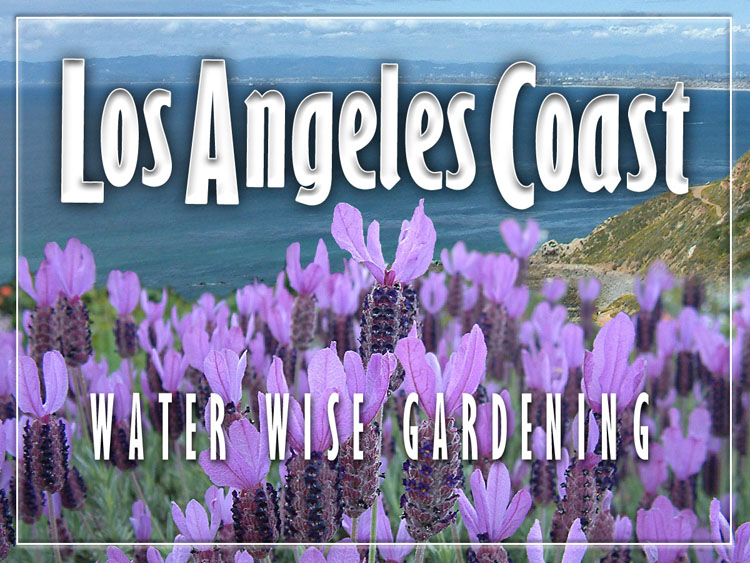
I stumbled onto a great resource from the City of Santa Monica for homeowners and residents of LA's Coastal Cities looking to reduce their landscape water usage.  "Los Angeles Water Wise Gardening" plant lists, watering tips, and the ability to create a plant list for your yard.  Perhaps the best feature, though, are the case studies of real gardens.  Each provides a different prototype design for different coastal situations, and includes interactive features that allow you to click on individual plants in the pictures and found out pertinent plant information (including anatomy, cultural requirements, and design suggestions).  Great portal for the amateur and professional alike to get ideas for our coastal landscapes.

Wednesday, March 17, 2010

Classes on Edible Gardens

 (image from US Forest Service.  All Rights Reserved)
The LA Times shared some exciting news yesterday about the UC Cooperative Extension's new "Grow LA Victory Garden Initiative." Beginning in late-March and early April, they will be offering classes at 11 locations in LA on growing your own food.  The classes run on 4 consecutive weekends, and at the completion of the program, participants will be certified Victory Gardeners. It should be a great opportunity to learn more about tending your urban garden from your fellow citizens.

Saturday, February 27, 2010

No seasons in LA? Think, or smell, again

 (image from LA Times)
I was pleased to see a little article from the LA Times about the allure of jasmine (especially their reference to an earlier piece about it as the harbinger of spring in LA) because I have been soaking it in the past three weeks on my walk to work.  One of the true pleasures of living close enough to work to be able to walk (in LA of all places), is getting a chance to engage in the world up close and through all five senses.  You are provided a chance to follow that tried and true advice to stop and smell the flowers.  And, about two minutes into my walk to work, a mature jasmine vine towers over a front fence, permeating the street with its sweet scent.  Or, in the more eloquent words of LA Times staffer Emily Green:
 It might happen tonight. Or tomorrow. But it won't happen gradually. It will come all at once. All over Los Angeles, the first pink buds of jasmine will erupt into sprays of new white flowers. The display will be chaste enough for a wedding arbor -- until nightfall. Then those blameless blossoms will let rip with a decidedly frank perfume, a mix of sweetness and musk that will refuse to be upstaged by any other smell L.A. can throw at it. Exhaust. Fire. Freshly manured lawns. At that moment, the first great swelling of spring will rise over the city in a sudden night fog of jasmine.
It is definitely the most memorable part of my walk in the early morning, and one of the most of my entire day. I look forward to it each morning eagerly, and sorely miss it on those few days I need my car.  Walking past the jasmine each morning also left me intrigued by measurements of seasonality in a climate like Southern California.  How do we mark the seasons in Los Angeles, and stand witness to the passing cycles of nature?  For the rest of the country, we mark it by weather, and obvious visual cues.  Winter is white, cold, dark, snowy, and full of "barren" landscapes.  Spring provides wet rains, warming temperatures, and the leafing out of new growth, while Summer is the bonanza of hot, sun-filled days.  Fall marks the arrival of a chill in the air, and the changing colors of deciduous leafs as they prepare to drop for the winter. But how do we understand the passing of the seasons in a place like Southern California, where seasonal temperature shifts are subtle, and where, due to moderate temps and constant irrigation, our landscape remains largely unchanged to the eye? Where life continues "uninterrupted" by weather? 

Smelling the jasmine every morning left me thinking that perhaps, here, our appreciation for the seasons might be measured by other senses. Perhaps our seasons can be understood by smell, even the smell produced by an exotic plant such as jasmine.  The smell of its new flowers resulting from winter rains and just enough of a chill to shoot out a rich bouquet to attract pollinators.  Perhaps we can remember Spring is coming each year by the smell of jasmine.  Or, as Emily Green added in her great piece about it:
We no longer need jasmine for the historic reasons: to cover up bad smells of open sewers and unbathed bodies. However, in so many other ways, we need jasmine more than ever, first for the romance, but also to pierce our infernal sophistication. Jasmine seduces us back into a state where we are capable of wonder at the pulses of the natural world. Aroused, we are suddenly alerted to the profound mysteries unfolding nightly in our own backyards.

Saturday, February 20, 2010

Modular Herb Garden Wall


(images from Sunset Magazine.  All Rights Reserved)
I stumbled on this the other day in Google images.  This creative wall in Laguna Beach is a simple, but great idea that provides privacy for the homeowners through modular and adjustable container plantings.  Not only can you easily change out your plants, but also adjust the design by shifting the boxes around.

Saturday, February 6, 2010

Scout Regalia

 (image of Outdoor Table Set from Scout Regalia. All Rights Reserved.)
The LA Times highlighted the Echo Park based design group Scout Regalia this past week.  In the designer's own words:
Scout Regalia is a Los Angeles based, multitasking design practice obsessed with the design and fabrication of space, furniture, home products, graphic identities, material processes, and sustainable living. Established in 2006 with Benjamin Luddy and Makoto Mizutani, the design studio is dedicated to supporting local fabricators, and aspires to embody innovation, discipline, and inquisitiveness in all the work that is produced. Embracing both the unassuming and ornamental aspects of design, Scout Regalia celebrates the inherent design of everyday living.
As if I wasn't already sold, among their many design interests are some cool outdoor furniture elements including an Outdoor Table Set and Patio Garden.
Image of Scout Regalia's Patio Garden. All Rights Reserved.

Thursday, February 4, 2010

Forage

 (image from Forage LA.  All rights reserved)
Interesting restaurant initiative out in Silverlake - urban foraging to create a meal. Forage LA is taking things beyond fresh ingredients from a local farmer's market to add in some urban agriculture.  Not only do they offer a number of different goodies everyday for consumption, Forage also puts out a call for backyard produce / urban agriculture to create changing menu items.  Recent Forage calls include: Oranges, Avocados, Herbs, Lemons and Limes.  You might even get your name on the menu, like Sonya's Silver Lake Lemonade. Images of the Lemonade being made are here.

Thursday, January 14, 2010

GUERILLA GARDENING - LA STYLE


For those not sure what Guerilla Gardening is, a few quotes from LA's Guerilla Gardening Chapter (LAGG) website sum it up:
"The illicit cultivation of someone else's land." - Richard Reynolds
"Gardening public space with or without permission." - David Tracey

Guerrilla Gardening is a grass-roots, worldwide movement begun in London that has a radical name and what some might perceive as a revolutionary agenda because of its manner of appropriating public or private space towards a communal good.  Empty lots, barren planters, weed filled right-of-ways, and even posters are appropriated under the cover of darkness to grow plants, and so-called "seed bombs" are thrown to propagate wildflowers and beautify neighborhoods.  Most often these unused spaces are converted into flower beds, but some groups have converted these spaces into productive urban agriculture landscapes or native plant havens.

This appropriation of spaces could be illegal depending on the locality, although the (il)legality of the act is lot more murky in Los Angeles.  Interestingly, though, many groups have found not just community members but property owners, and even municipalities, receptive to these initiatives.  In large part this has been the case in Los Angeles, probably due to the LAGG's mission which seems to be more of a community-based approach to improving our often neglected public spaces than an assault on private property.  As LAGG describes it, their mission is:
"To not only get our hands dirty and start gardens all over Los Angeles, but to become a resource for other potential Guerrilla Gardeners and a homebase for people interested in brightening their own communities."
That doesn't mean they aren't stirring things up, and enjoying the anti-establishment edge of the movement.  Many members have adopted clever pseudonyms (Phil O'Dendron and Lord Aloe are two personal favorites), and the group coordinates a number of social outings with the air of cloak and dagger ecological missions.  Ultimately, that might be the greatest success of the Guerilla Gardening movement is interjecting some intrigue, coolness, fun, hipness, and sexiness into gardening.  They aren't just planting a few shrubs, they are part of an anti-establishment movement.

Whether the groups mission seems overly radical to you, it is certainly an opportunity to work together to maximize the limited open space we have in urban areas to transform them into functioning aesthetic and ecological elements within the urban fabric.  Perhaps the key for even wider adoption is working to create partnerships that don't require the cloak of darkness to achieve this, even if the bandanas make it hip to be an urban gardener.

Some cool links about Guerilla Gardening in LA and beyond:
http://www.laguerrillagardening.org/
http://www.guerrillagardening.org/